Ama Dablam Base Camp

Trip Overview
The Ama Dablam Base Camp trek is a captivating journey that offers trekkers a unique blend of adventure, culture and natural beauty in the Everest region of Nepal. Starting from Lukla, the trek takes you through picturesque Sherpa villages, ancient monasteries and diverse landscapes culminating at the base of the stunning Ama Dablam, one of the most beautiful peaks in the Himalayas.
As you ascend through the Khumbu region, you’ll pass through vibrant villages like Namche Bazaar, the bustling gateway to Everest, where trekkers acclimatize and soak in the local Sherpa culture. The trail then winds its way through lush rhododendron forests, suspension bridges and alongside glacial rivers gradually revealing breathtaking views of the Himalayan giants including Everest, Lhotse and Nuptse. Along the way, you’ll visit the renowned Tengboche Monastery, a spiritual heaven with panoramic views that serve as a perfect backdrop to the monks’ morning prayers.
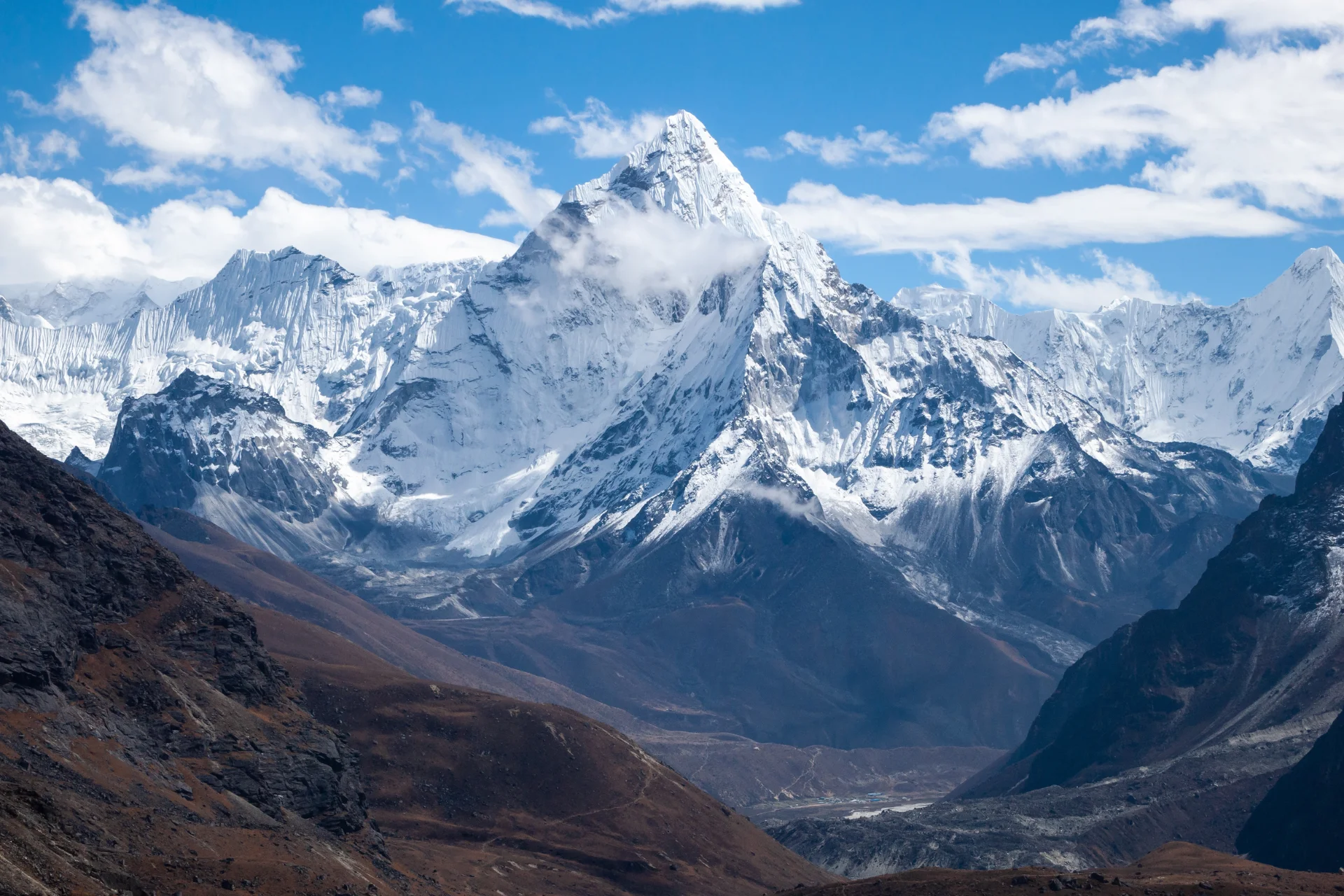
The highlight of the trek is reaching Ama Dablam Base Camp, situated at 4,570 meters (15,000 feet). Here, trekkers are rewarded with an up-close view of Ama Dablam’s majestic, towering spire. The mountain, often referred to as the “Matterhorn of the Himalayas” for its dramatic shape, dominates the skyline and provides a surreal and humbling experience for those who reach its base.
This trek is not just about the destination, but also the journey itself. The cultural immersion in Sherpa communities, the serene beauty of the Himalayan landscape and the spiritual encounters at ancient monasteries makes the Ama Dablam Base Camp trek a deeply enriching experience. It’s a trek that challenges the body, inspires the soul, and leaves trekkers with lasting memories of one of the most beautiful regions in the world.
- Ama Dablam Base Camp
- Less Crowded
- Sherpa Villages
- Monasteries
- Breathtaking Landscapes
- Himalayan Panorama
- Rhododendron Forests
- Challenging Terrain
- Namche Bazaar
- Tengboche Monastery
- Wildlife Encounters
- Sagarmatha National Park
- Thrilling Start/End
Cost Includes:
- Trekking Permits
- Transportation
- Accommodation during trek *
- Guide and Porter
- Meals during trek *
- First Aid Kit
- Taxes and Fees
- Insurance for Guide And Porter
- Airport pick up and drop off
Cost Excludes:
- International Flights
- Visa fees
- Travel Insurance
- Personal Expenses
- Additional Services
- Alcoholic Beverages
- Extra Accommodation
- Cost Due To Unforeseen Events
* The cost for each trip may vary based on the selected itinerary, the duration of the trip, and any personal preferences you may have. During treks, your package includes accommodation with breakfast, lunch, and dinner. However, for your stay in major cities, accommodation is provided at a hotel where only breakfast is included, served by the hotel itself.
Fitness Level
Ensure you are physically fit, as the trek involves steep ascents, descents and high altitudes.
Acclimatization
Take your time to acclimatize properly to avoid altitude sickness, with rest days in Namche Bazaar and Pangboche.
Trekking Permits
Secure the necessary permits, including the Sagarmatha National Park Permit and the TIMS card, before starting the trek.
Weather Conditions
Be prepared for rapidly changing weather, especially at higher altitudes, and pack accordingly.
Best Time to Trek
The best seasons for the trek are pre-monsoon (March to May) and post-monsoon (September to November) for clear skies and favorable conditions.
Hydration and Nutrition
Stay hydrated and maintain a balanced diet during the trek to sustain your energy levels.
Trekking Gear
Bring appropriate trekking gear including sturdy boots, warm clothing, a sleeping bag and a good-quality backpack.
Respect Local Culture
Show respect for local customs and traditions, especially when visiting monasteries and interacting with the Sherpa community.
Travel Insurance
Ensure you have comprehensive travel insurance that covers high-altitude trekking and emergency evacuation.
Cash Availability
Carry sufficient cash in Nepali Rupees, as ATMs are scarce along the trail, and credit cards are rarely accepted.
Health Precautions
Consult with a doctor before the trek, and consider carrying a basic first-aid kit and any necessary medications.
What is the difficulty level of the Ama Dablam Base Camp trek?
The trek is considered moderately challenging. It involves steep ascents and descents, and high-altitude trekking, requiring a good level of fitness and some prior trekking experience.
How long is the Ama Dablam Base Camp trek?
The trek typically takes 12 days, including arrival and departure days, acclimatization, and a day for sightseeing in Kathmandu.
What is the best time to trek to Ama Dablam Base Camp?
The best time for the trek is during the pre-monsoon (March to May) and post-monsoon (September to November) seasons, when the weather is stable, and the skies are clear.
What permits are required for the trek?
You will need a Sagarmatha National Park Permit and a TIMS (Trekkers’ Information Management System) card to trek to Ama Dablam Base Camp.
What type of accommodation is available on the trek?
Accommodation is in teahouses along the trekking route. These are basic lodges that provide a bed, blankets and meals. Facilities are basic but sufficient for trekkers.
How can I prevent altitude sickness?
To prevent altitude sickness, it’s important to acclimatize properly by taking rest days, staying hydrated, ascending slowly and being aware of symptoms like headaches and nausea.
What kind of weather can I expect?
Weather can vary greatly depending on the season and altitude. Expect colder temperatures at higher elevations with potential for snow and rapidly changing conditions. Layers and warm clothing are essential.
What should I pack for the trek?
Essential items include sturdy trekking boots, warm clothing (layers), a sleeping bag, a down jacket, a rain jacket, sunscreen, a hat, sunglasses, a first-aid kit and a good-quality backpack.
Is there Wi-Fi and electricity available during the trek?
Wi-Fi and charging facilities are available in most teahouses but they may be unreliable and are often provided at an additional cost. It’s a good idea to bring a portable power bank.
What is the highest point on the Ama Dablam Base Camp trek?
The highest point is Ama Dablam Base Camp, which is at an altitude of 4,570 meters (15,000 feet).
Is travel insurance necessary?
Yes, travel insurance that covers high-altitude trekking and emergency evacuation is essential for the Ama Dablam Base Camp trek.
How do I get to the starting point of the trek?
The trek starts with a flight from Kathmandu to Lukla, a small town with an airstrip that serves as the gateway to the Everest region.
Trip Start & End | Kathmandu – Kathmandu | Meals | Breakfast, Lunch and Dinner |
Maximum Altitude | 4570m, Ama Dablam Base Camp | Difficulty Level | Challenging |
Transportation | Flight | Best season | Sept-Nov, Mar-May |
Accommodation | Hotels, Tea Houses | Trip Area | Sagarmatha National Park |
Day 1: Arrival in Kathmandu
→ Activities: Arrival at Tribhuvan International Airport in Kathmandu. Our representative will transfer you in hotel. After check-in, you can relax and recover from your journey or explore the nearby areas.
→ Overnight: Hotel in Kathmandu
Day 2: Kathmandu Sightseeing and Trek Preparation
→ Activities: After breakfast, embark on a guided tour of Kathmandu’s UNESCO World Heritage Sites. Visit the sacred Pashupatinath Temple, the serene Boudhanath Stupa and the ancient Swayambhunath (Monkey Temple).Visit Kathmandu Durbar Square to see historical palaces and courtyards. Final preparation for the trek includes a briefing with your guide and checking your trekking gear.
→ Overnight: Hotel in Kathmandu
Day 3: Fly to Lukla and Trek to Phakding
→ Flight Duration: 35 minutes
→ Trekking Duration: 3-4 hours
→ Activities: An early morning flight from Kathmandu to Lukla. Begin the trek by descending through the Dudh Koshi Valley to the village of Phakding.
→ Overnight: Teahouse in Phakding
Day 4: Trek from Phakding to Namche Bazaar
→ Trekking Duration: 6-7 hours
→ Activities: The trail follows the Dudh Koshi River, crossing several suspension bridges, including the famous Hillary Suspension Bridge. Climb through pine forests and pass small villages before the steep ascent to Namche Bazaar, the bustling Sherpa town.
→ Overnight: Teahouse in Namche Bazaar
Day 5: Acclimatization Day in Namche Bazaar
→ Activities: Spend the day acclimatizing to the altitude. Explore Namche Bazaar, visit the local markets and hike up to the Everest View Hotel for panoramic views of Everest, Lhotse and Ama Dablam.
→ Overnight: Teahouse in Namche Bazaar
Day 6: Trek from Namche Bazaar to Tengboche
→ Trekking Duration: 5-6 hours
→ Activities: The trail offers stunning views of Everest, Ama Dablam and other peaks as it winds through rhododendron forests. Descend to the Dudh Koshi River before a steep ascent to Tengboche.
→ Overnight: Teahouse in Tengboche
Day 7: Trek from Tengboche to Pangboche
→ Trekking Duration: 3-4 hours
→ Activities: A relatively short trek with a gradual climb to Pangboche, the highest permanent settlement in the region. Visit the ancient Pangboche Monastery, the oldest in the Khumbu region.
→ Overnight: Teahouse in Pangboche
Day 8: Trek from Pangboche to Ama Dablam Base Camp and Return to Pangboche
→ Trekking Duration: 6-7 hours
→ Activities: Trek to Ama Dablam Base Camp, following a trail that offers close-up views of Ama Dablam and other surrounding peaks. Spend some time at the base camp, taking in the breathtaking scenery and exploring the area before returning to Pangboche.
→ Overnight: Teahouse in Pangboche
Day 9: Trek from Pangboche to Namche Bazaar
→ Trekking Duration: 5-6 hours
→ Activities: Retrace your steps back to Namche Bazaar, descending through forests and crossing rivers. Enjoy your last night in Namche with some comfort after the trek.
→ Overnight: Teahouse in Namche Bazaar
Day 10: Trek from Namche Bazaar to Lukla
→ Trekking Duration: 6-7 hours
→ Activities: Continue the descent to Lukla, passing through Phakding and several Sherpa villages along the way. Arrive in Lukla and relax, celebrating the completion of your trek.
→ Overnight: Teahouse in Lukla
Day 11: Fly from Lukla to Kathmandu
→ Flight Duration: 35 minutes
→ Activities: Take an early morning flight back to Kathmandu. Upon arrival, transfer to your hotel and enjoy the rest of the day at leisure.
→ Overnight: Hotel in Kathmandu
Day 12: Departure from Kathmandu
→ Depending on your flight schedule transfer to Tribhuvan International Airport for your departure.
Treks You May Like