Pashupatinath: Where Divinity Meets Heritage
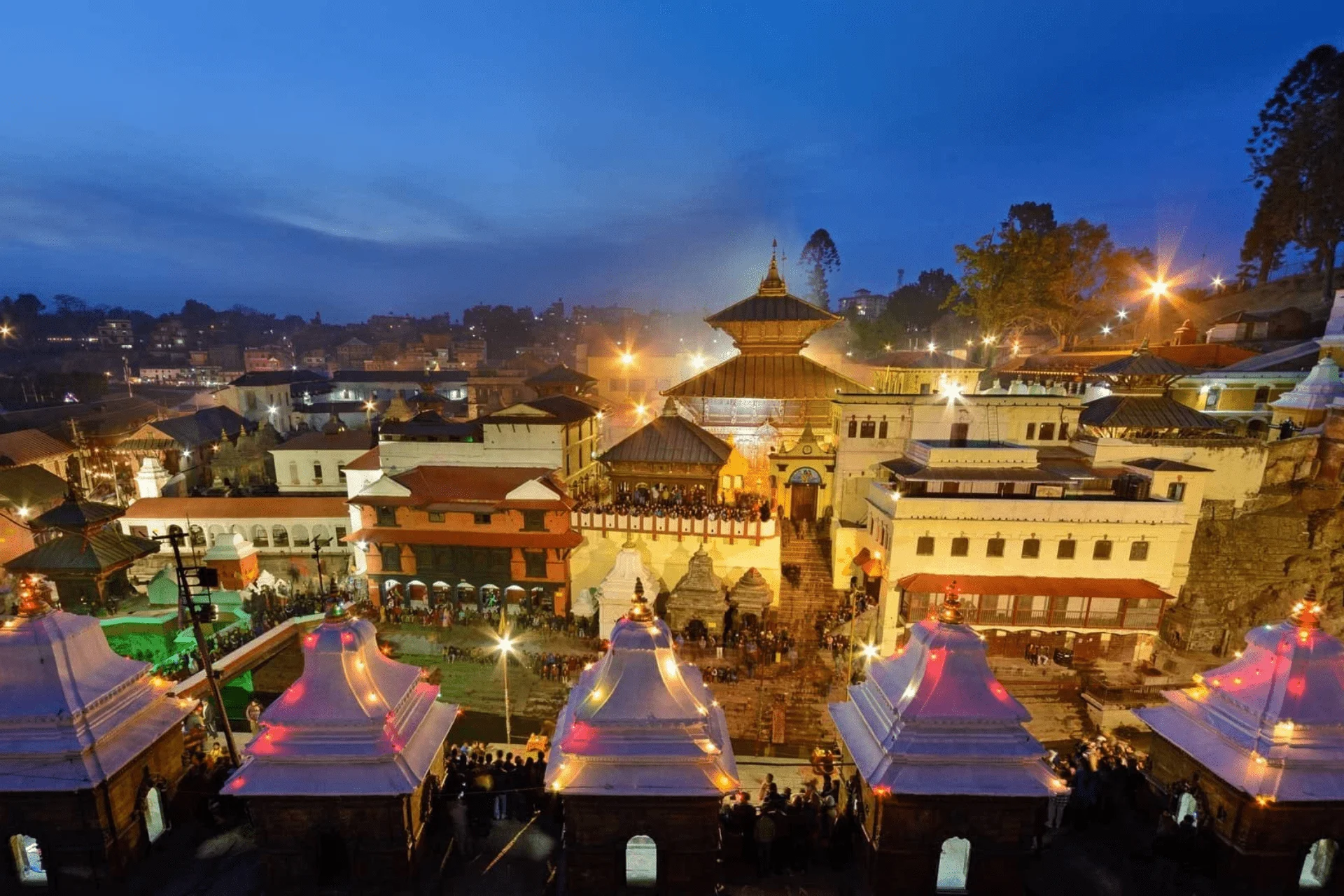
Nestled on the banks of the Bagmati River in Kathmandu Nepal, the Pashupatinath Temple stands as one of the most revered and ancient Hindu temples dedicated to Lord Shiva. This architectural and spiritual marvel is not only a center of worship but also a UNESCO World Heritage Site, embodying the rich cultural and religious traditions of Hinduism.
The temple’s origins trace back to the 5th century, though some historians argue that its establishment may date even earlier. Over the centuries, Pashupatinath has undergone numerous renovations and expansions, each phase contributing to its grandeur and spiritual aura. The main temple, built in the distinctive pagoda style, features a gilded roof and intricately carved wooden rafters that showcase the exquisite craftsmanship of the time. Surrounding the central shrine are various other temples and shrines each dedicated to different deities adding layers of spiritual significance to the complex.
Pashupatinath’s cultural and religious importance is unparalleled, particularly among followers of Shaivism, a major tradition within Hinduism that worships Shiva as the supreme deity. The temple is a focal point for Hindu pilgrims, especially during Maha Shivaratri, a festival that celebrates Lord Shiva. During this time, devotees from Nepal, India and across the world flock to the temple to partake in prayers, rituals and festivities creating an atmosphere of profound devotion and spirituality.
While the main temple is exclusively accessible to Hindus, non-Hindu visitors are permitted to view the temple from the opposite bank of the Bagmati River. This policy reflects a respect for the sanctity of the temple’s inner sanctum while also accommodating the curiosity and reverence of people from diverse backgrounds. The surrounding temple complex, however, is open to all visitors allowing them to immerse in the site’s historical and cultural ambiance.
The spiritual atmosphere of the Pashupatinath Temple is palpable with the air filled with the sound of chanting mantras, the fragrance of incense and the sight of devotees engaged in various rituals. Priests perform traditional ceremonies and the faithful offer their prayers creating a living tapestry of religious practices that have endured for centuries.
One of the most poignant aspects of Pashupatinath is its role in the Hindu funeral rites. The ghats (stone steps) along the Bagmati River near the temple are significant sites for cremations. It is believed that dying and being cremated at Pashupatinath liberates the soul from the cycle of rebirth, granting it moksha (liberation). This belief imbues the temple with a deeper, existential significance for Hindus, as it bridges the earthly and the divine.
The Pashupatinath Temple is more than just a religious site; it is a cornerstone of Hindu heritage reflecting centuries of devotion, architectural brilliance and cultural richness. Its enduring legacy continues to draw pilgrims and visitors alike, offering a sanctuary where the spiritual and the temporal converge. As one of the holiest shrines in Hinduism, Pashupatinath stands as a testament to the profound and timeless faith of millions, encapsulating the essence of spiritual seeking and devotion.
Highlights
- Sacred Site
- Architectural Marvel
- Religious Significance
- Cremation Ghats
- Deity and Shrines
- Sadhus and Monks
- Festivals and Celebrations
- Natural and Cultural Setting
- Visitor Experience
- Accessibility
Cost Includes:
- Accommodation
- Meals
- Transportation
- Guiding Service
Cost Excludes:
- Personal Equipments
- Travel Insurance
- Additional Snacks/Drinks
- Miscellaneous Personal Expenses
- Cost due to unforeseen Events
→ Arrive at Tribhuvan International Airport, Kathmandu. Meet and greet by your tour representative.
→ Transfer to your hotel in Kathmandu. Check-in and freshen up.
→ Briefing about the pilgrimage and itinerary.
→ Visit Boudhanath Stupa, one of the largest stupas in Nepal and a UNESCO World Heritage Site. Participate in the evening prayers and soak in the spiritual atmosphere.
→ Overnight stay in hotel in Kathmandu.
→ Early breakfast at the hotel.
→ Visit Pashupatinath Temple, one of the holiest Hindu temples dedicated to Lord Shiva. Explore the temple complex including the main shrine, cremation ghats (Arya Ghat) and smaller shrines dedicated to various deities.
→ Visit nearby temples and cultural sites, such as Guhyeshwari Temple and Jal Binayak Temple.
→ Witness the evening arati ceremony at Pashupatinath Temple, a mesmerizing experience with chanting, music and rituals.
→ Overnight stay in Hotel in Kathmandu.
→ Optional early morning visit to Pashupatinath Temple for peaceful meditation and spiritual reflection.
→ Explore Kathmandu Durbar Square, another UNESCO World Heritage Site, known for its ancient palaces, temples and artistic monuments.
→ Visit Swayambhunath Stupa (Monkey Temple), an iconic Buddhist stupa with panoramic views of Kathmandu Valley.
→ Free time for personal exploration or shopping in Thamel, a vibrant area known for its shops, restaurants and cultural sights.
→ Overnight stay in Hotel in Kathmandu.
Pashupatinath Temple is renowned as one of the most sacred Hindu temples dedicated to Lord Shiva. It holds immense religious significance and is a UNESCO World Heritage Site.
It is advisable to dress modestly and conservatively when visiting Pashupatinath Temple. Women should wear long skirts or pants and cover their shoulders, while men should wear long pants and avoid sleeveless shirts.
The best time to visit Pashupatinath Temple is during the early morning or late afternoon to witness the arati (prayer ritual) ceremonies, which are particularly mesmerizing. The temple is also beautiful to visit during Hindu festivals such as Maha Shivaratri.
Yes, Pashupatinath Temple celebrates various Hindu festivals with great enthusiasm. The most significant festival is Maha Shivaratri, dedicated to Lord Shiva, which attracts thousands of devotees.
Yes, photography is generally allowed in designated areas of Pashupatinath Temple. However, it’s advisable to respect the sanctity of the temple and seek permission before taking photos of people, particularly during religious ceremonies.
The main attractions included in the package typically are
- Visit to Pashupatinath Temple and exploration of the temple complex
- Participation in arati ceremonies at the temple
- Visit to nearby cultural sites such as Boudhanath Stupa and Swayambhunath Stupa
- Guided tours with insights into Hindu traditions and Kathmandu’s cultural heritage
Yes, many tour operators offer customizable pilgrimage packages to Pashupatinath Temple. You can discuss your preferences and requirements with the tour organizer to tailor the itinerary according to your needs.
Yes, traveling to Pashupatinath Temple is safe for tourists and pilgrims. However, it’s advisable to check local travel advisories and respect local customs and traditions during your visit.
Yes, visitors are welcome to offer prayers and participate in rituals at Pashupatinath Temple. It’s recommended to observe and respect the religious practices and customs followed at the temple.
The cremation ghats (Arya Ghat) at Pashupatinath Temple are a significant part of the temple complex where Hindu cremation rituals take place. Visitors can observe these rituals from a respectful distance, gaining insight into Hindu funeral traditions.
Yes, there are hotels and guesthouses located near Pashupatinath Temple where visitors can stay during their pilgrimage. These accommodations offer basic amenities and convenient access to the temple.
Yes, most pilgrimage packages to Pashupatinath Temple include visits to other cultural and religious sites in Kathmandu such as Boudhanath Stupa, Swayambhunath Stupa and Kathmandu Durbar Square. These sites offer additional insights into Nepal’s rich cultural heritage.